Showing posts with label teaching. Show all posts
Saturday, May 12, 2018
The Moment You've Been Given
I read this quote regarding our day to day lives and our work. But I think it really applies to teaching preschoolers. Too often we get caught up in what we are trying to teach or communicate or do. Or we get focused on what we want to help children build or discover for their future lives. We forget to focus no the now, to be present in the moment and truly experience that moment with children.
Who they are and who you are will not be the same later in the day or tomorrow. The moment will be different - not necessarily better or worse but different. Experience each moment fully without getting hung up on what's next.
Thursday, September 28, 2017
My Teaching Now
Warning: Reflection ahead. Thoughts may be smaller (or larger) than they appear.
I love teaching. I love watching boys and girls think and play and explore. I enjoy talking with them and just listening to them. But lately I'm wondering about my teaching.
I like to find different types of materials. I like trying new things. But lately it seems that I've just been sticking with "regular" stuff and not bringing lots of different new things into the classroom.
In my church class, things have changed over the past few years. A couple of years ago, we had about 10 or so children coming regularly. This group liked to do different things and were interested in anything new or different that appeared in our room.
Last year we had about 5 or so children who came regularly. This group liked to play and explore. They REALLY liked blocks and building. Oh, and cars. They liked cars. They didn't do much art. They would play games or work puzzles from time to time - and liked new games when I brought them in. They liked new ideas...sometimes. And other times they ignored what I had put out and built towers to knock down or jump over.
This year we have fewer than 5 children who come regularly. And all of those haven't been there on the same week - we have just a portion each time. This group likes using the dishes and setting the table and feeding the dolls. They enjoy blocks or a game or art from time to time. But I'm still learning about them and their interests.
I've been judging my teaching. I don't bring a lot of extra stuff to the room. We haven't done anything really "cool" or different or unusual. Does that make me not as good...or even an almost bad teacher??
As I reflect here, thinking about what I'm doing and how I'm feeling, I think it's just part of developing as a teacher. I'm working to understand a new group of kids. I have fewer kids so I don't need as many different things to make sure everyone has choices and things to do. And maybe it's a time for me to think more about my teaching...to cocoon until my next big new burst of teaching insight and practice.
Whatever it is, I want to enjoy the season I'm in now and work to move to wherever this journey takes me next. And I'm going to stop comparing myself to other teachers and to my past self. Embrace today and push for tomorrow.
I love teaching. I love watching boys and girls think and play and explore. I enjoy talking with them and just listening to them. But lately I'm wondering about my teaching.
I like to find different types of materials. I like trying new things. But lately it seems that I've just been sticking with "regular" stuff and not bringing lots of different new things into the classroom.
In my church class, things have changed over the past few years. A couple of years ago, we had about 10 or so children coming regularly. This group liked to do different things and were interested in anything new or different that appeared in our room.
Last year we had about 5 or so children who came regularly. This group liked to play and explore. They REALLY liked blocks and building. Oh, and cars. They liked cars. They didn't do much art. They would play games or work puzzles from time to time - and liked new games when I brought them in. They liked new ideas...sometimes. And other times they ignored what I had put out and built towers to knock down or jump over.
This year we have fewer than 5 children who come regularly. And all of those haven't been there on the same week - we have just a portion each time. This group likes using the dishes and setting the table and feeding the dolls. They enjoy blocks or a game or art from time to time. But I'm still learning about them and their interests.
I've been judging my teaching. I don't bring a lot of extra stuff to the room. We haven't done anything really "cool" or different or unusual. Does that make me not as good...or even an almost bad teacher??
As I reflect here, thinking about what I'm doing and how I'm feeling, I think it's just part of developing as a teacher. I'm working to understand a new group of kids. I have fewer kids so I don't need as many different things to make sure everyone has choices and things to do. And maybe it's a time for me to think more about my teaching...to cocoon until my next big new burst of teaching insight and practice.
Whatever it is, I want to enjoy the season I'm in now and work to move to wherever this journey takes me next. And I'm going to stop comparing myself to other teachers and to my past self. Embrace today and push for tomorrow.
Labels:
teaching
Monday, March 27, 2017
A Big Mistake
What's the biggest mistake you've made in a classroom? Oh, I've made some great ones along the way. I think the first one that comes to mind happened when I was teaching first graders. I had put up a wonder wall and received lots of great questions and wonders. One day, when reading some of the wonders in our group, I read a great question about rainbows - and then I proceeded to answer it instead of leading the group in ways to discover the answer. I realized that mistake as I drove home. I'd missed a great opportunity to lead children in discovering their own answers to questions.
I've made spelling mistakes and factual mistakes in the classroom. I've tried things that just didn't work or that just didn't interest the children like I thought it would.
I think about how to take advantage of mistakes when I make them - showing the children that we all make mistakes and mistakes help us learn. I think about how plan to avoid general mistakes. I think about how to laugh when I make them and how to encourage when kids make them.
But when I think about a big mistake I could make in the classroom, I come back to the mistake of not trying new things. I get really comfortable in my classroom and in my way of doing things. I like when things feel comfortable. But if I always do things the same way without evaluating why I'm doing it - that's a mistake. If I only do something because it worked last year or the past however many years and don't filter what I'm doing against the characteristics of my current class - that's a mistake. If I don't listen and look at the kids I have when I'm planning and when I'm teaching - that's a mistake.
Of course, if I decide to jump on the latest trend in the classroom and don't weigh what I'm doing and why I'm doing it - that's a mistake. Just being novel isn't a good enough reason to bring things into my classroom. It must connect with my kids and our classroom community.
I love consistency - and so do young children. I love new things - and so do young children. But one of the biggest mistake I can make is to be oblivious. Not noticing my kids and their likes and interests. Not seeing their strengths and their areas of needed growth. Teaching as if what matters most is my needs and my comfort.
Why am I thinking about all of this? I'm wondering if I've fallen into a rut with my teaching. I do pay attention to what my church kindergarten kids like and want and need. But things seem very lax lately. I'm not really working much to prepare and plan. Maybe I've become very efficient at it...but it seems like there's something else that may be missing. It's more like I'm going through the motions more than really preparing to teach that group of kids. And if that's true, that's a really big mistake.
Labels:
learning environment,
teaching
Monday, January 16, 2017
Some Ideas from Around the Blogosphere
I love reading new things. I love being reminded of old things. I read some favorite blogs regularly and I find other things by happenstance (and Twitter).
Here are few things that piqued my interest in the past couple of weeks.
Want to Raise Successful Boys? Science Says Do This (But Their Schools Probably Won't) - Inc.com
Amanda from Not Just Cute shared this link. Boys need to move but are not allowed to do so in school. "Boys are treated like defective girls." Definitely worth a read.
Powerful Words to Say Instead of "Good Job" - Teach Preschool
Deborah shares her conversation with Rae Pica and Randy Hitz (on BAM Radio Network) and delves a little more into the topic. She makes me think about how I respond (and maybe how I should respond) to the children in my classroom.
Why Did He Leave the Room? - EdWords
Speaking of BAM Radio Network, Jon Harper is a featured writer on the blog there. He shared these ideas and lessons gains from writing with his kindergartner.
DIY Building Blocks You Can Make Anywhere - Hands On As We Grow
I'm always look for new or other ways in incorporate building activities. Especially with the group I have this year. This fun and quick idea triggered all kinds of possibilities for me. I'm thinking I can add these simple "blocks" to our center with our wooden blocks...and just see what happens.
Letting the Teachable Moment Pass - Teacher Tom
Tom is good at helping me challenge assumptions I have. In this post, he affirmed what I sometimes do. Let kids talk about things and come to their own conclusions without stopping to teach. It's important for kids to ponder and wonder and conclude without adults "robbing" them of this thinking by supplying knowledge. Thanks, Tom.
What has challenged you or caused you to think recently?
Labels:
development,
teaching
Friday, November 25, 2016
Subordinate Agenda
![]() |
| Read more about this in my post on EdWords |
While I may think about activities and choose resources...while I may think about what will happen in the classroom...while I may see lots of possibilities for learning, my thinking and planning should take a backseat to the thinking and exploration of my kids. They will explore and experiment to make sense of the world and of their own ideas/thinking. I must be willing to relinquish control of the learning.
*(My friend used the cube blocks to spell PIXAR.)
Tuesday, November 8, 2016
Wielding Our Power Carefully
A few years ago, my wife took several recycle/repurpose items to a preschool classroom to use as "environmental instruments" with the other rhythm instruments. She took some paper towel tubes, plastic plates, and some paper wads; children took pairs of each item to tap together and create some different rhythm sounds.
Another teacher remarked that she had brought trash for the kids to use...and her tone was an unfavorable one. Kids immediately began calling the items "trash," especially the paper wads. They used them reluctantly and quickly moved to change to something else when the time came. Weeks later, they still referred to the items as trash and wanted to quickly trade whenever they can. While one child was tapping the paper wads together, another child said, "He's got the trash!" The first kid immediately dropped them and wouldn't play until he moved to the next instrument.
I think that we adults sometimes forget the power we have. Our influence can go beyond learning content. Our reactions, comments, facial expressions, and words can impact how kids feel about what they are doing and even how they feel about themselves. How I wish that teacher had enthusiastically said, "Look at what we can use as instruments. We can use things that normally would be thrown away to make rhythms and music." I think then the kids would be excited to use "trash" as instruments.
Vanessa at Pre-K Pages often says that we sometimes need to sell what we are doing. We can make things sound exciting and wonderful...or challenging and difficult...or undesirable and weighty.
Now my wife and I work together with a group of 4-year-olds in a music/choir class. This group is enthusiastic about just about everything. One thing that my wife does each week involves our lining up to leave the room and move to the next thing. As you know, most kids want to be the leader of a line. But Cindy makes every place in the line seem special. She lines them up in different ways - calling names or describing clothing or using initial letters of names. But it's always like this: "Who will be #3 in line? It is Liam! You are number 3!" Each position in line is exciting. I haven't heard a child yet who complains about who is leader or who whines to be first in line. Every place is great!
We must wield our power carefully. Our thoughts about a child can become everyone's opinion. If we use an exasperated voice in talking to this child...or act in ways that seem that the child is difficult...or do anything that singles out any child - that attitude could be transferred to other children. Or if we think that something is boring or tiresome, kids will begin to think that it is boring.
This made me think of the Spiderman quote: "With great power comes great responsibility." If an idea seems unusual to me, I should help explore it (not dismiss/reject it immediately). I shouldn't try to impose my interests and tastes on the kids. I need to help the kids explore a variety of ideas and develop their own unique interests and tastes.
And I should be excited about learning and discovering. Because they already are and I shouldn't dampen that.
Labels:
teaching
Monday, September 19, 2016
That Time I Failed
An important part of teaching is being a learner. I like to learn new things and try new things. I like to improve what I'm doing and getting feedback on what I can change. Some of the best feedback happens when I fail - when things don't go as planned or when I see it fall apart. Then I learn the best lessons - how to do it better.
One particular time sticks in my mind. In fact, I can still feel the realization of my failure today, 3 years later.
I was teaching first grade. I had read about wonder walls - ways to capture kids' ideas and curiosity. So we started a wonder wall. I created a special place on a bulletin board. I lay self-stick notes near the wall. I introduced it to the kids and told them to write anything they wondered about. We would look at some of their notes from time to time.
This was a success. Kids wrote their wonders and put them on the wall.
One afternoon I pulled a couple from the wall and took them with me to our gathering spot. We had read a book and were winding down from the day. I read one of the wonders and we talked about it. (I don't remember this one.) Then I read a wonder that was something like: "I wonder what makes rainbows." Kids shared their ideas. The range of ideas was vast. Some were fanciful. Some were scientific. Some were religious.
Then it happened.
I began talking about rainbows and how they were formed by sunlight passing through raindrops. I didn't get too scientific but I did all the talking. They asked questions. We talked about it until they (and I) seemed to get to a point of closure. Then we moved on.
The day ended. I did my after school tasks. I was driving home. And the realization dawned on me. Well it hit me more like a board upside the head.
I had failed. I did not facilitate the learning. I lectured. I gave the answer. I was the sage, the know-it-all.
I thought about how things could have been. We could have talked about their ideas. I could have gathered books or online resources for research. I could have led them to discover the answer rather than give them the answer.
It bothered me. I know better. Or at least I claim to know better.
Did I cause harm to the kids or their learning? No. Did I steal a valuable learning opportunity from them? Perhaps.
Did I realize how easy it is to give information instead of facilitate learning? Yes.
That doesn't mean that I don't try to shortcut from time to time. But whenever I do, I remember the rainbow fail.
And it helps me recalibrate back to facilitator - asking questions and leading them toward discovery.
That time I failed hopefully has led to more success.
Labels:
philosophy,
teaching
Saturday, September 17, 2016
A Class of Learning
Each year I get new opportunities to learn (as well as teach). What is this class of kids teaching me? What things work? What doesn't work? What do I need to change?
I can always learn more about teaching and learning...if I'm open to it.
Saturday, September 3, 2016
Our Impact on Kids
We have a profound impact on kids. What we say...what we do...what we allow. Choose words carefully. Listen carefully (to what they say with words and what they say with actions). Choose reactions carefully. Kids form their ideas about themselves by our interactions with them.
Friday, August 26, 2016
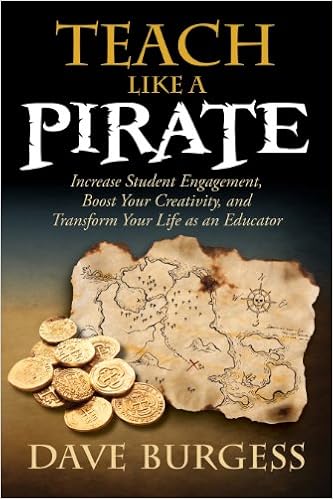
Wrap Up and Final Reflections on Teach Like a Pirate
I am reading and reflecting on the book Teach Like a Pirate by Dave Burgess. The "pirate" philosophy is built on these things: Passion, Immersion, Rapport, Ask/Analyze, Transformation, and Enthusiasm.
(and in the next book -whatever that is)
Next book: Free to Learn by Peter Gray
Part III - Building a Better Pirate
The Awkward Question
Where Do I Start?
Finding a Crew
In this last section of the book, Dave Burgess offers some encouragement to take the leap and become a pirate teacher. He asks the question: "Do you want to be great?" Then he examines why we teachers want to shy away from that question. He challenges us to embrace wanting to be a great teacher - "mediocrity doesn't motivate" he says. And he's right. We should want to be great teachers and not worry about what others may think or do.
He asks a second question: "Where do I start?" The answer? Here and now. Take a step. Don't just swallow the fear, live it. Try something; take a risk; be ready to fail. He says, "If you haven't failed in the classroom lately, you probably aren't pushing the envelope enough." I agree. I think it's okay to fail. It's not okay to just stay there. Learn from it and try again. If others criticize (and someone will), examine it. If it's legitimate, learn from the critical remarks. If not, ignore it and keep working to be great.
And look to build a support system - a crew. You can't sail on your own. "Don't be limited by your subject, grade level, school, or even profession. Take counsel from a wide variety of people and seek out multiple perspectives." That's why I love Twitter. I follow a lot of educators - most of them are in early childhood or elementary. Some are in middle and high school. Some are administrators or leaders in higher education. But I also follow publishers and graphic designers, photographers and ministers. I try to keep a wide variety of perspectives. You never know where the next inspiration comes from. I think this book proves this very principle. Dave Burgess does not teach early childhood kids. But as I read through his ideas, I saw how his concepts fit into my philosophy - and how those concepts challenged my philosophy, too. If I read only early childhood educators, I would have missed this book and what I've gleaned from it.
Final Thoughts
I loved this book. All the questions and different "hooks" pushed me to think beyond what I normally think. It made me take a step back and think about some critical thoughts I've had about some other teachers' approach. (But I still keep my stand as Team No Glitter!)
As I wrote in the previous post on this book, this book is about being intentional. I need to make deliberate choices in what I do in the classroom. Not just what I do but what I don't do, what I create the space to look and sound like, what I let go and what I don't. My teaching is more than a set of activities or a block of content. It's an experience that can be fun, unexpected, and memorable. (Or none of those things.)
Here are a few additional quotes that motive me to be a more passionate - great! - teacher:
- "Great teaching gets messy sometimes and we have to constantly be aware of the changing landscape in our rooms and make 'moves' based on what works, not on what is necessarily theoretically ideal or, God forbid, scripted."
- "When in doubt, take action."
- "Realize that anytime you say yes to something, you are saying no to something else. Learn to say yes to the significant."
- "Some choices are major and others are minor, but even the minor decisions, when added up, create impact."
- "Provide an uncommon experience for your students and they will reward you with an uncommon effort and attitude."
And this one sums up where I want to be as a teacher--
"Forget about all the things that you can't control and play your drum to the best of your abilities. Play with all the passion, enthusiasm, and heart you can muster. Nothing else really matters."See you out there on the high seas!
(and in the next book -
Next book: Free to Learn by Peter Gray
Monday, August 8, 2016
Some Inspiration from Blogosphere As School Year Starts
It's that time of year. School has started here where I live. Other teachers and students are headed back in the coming weeks.
Here are some things I've read recently that have interested me and have me thinking as school gears up again.
- Opening Up My Technology Can of Worms (Living Avivaloca)
Aviva muses on technology and self-regulation. She makes some interesting points and made me think. - My Take on Curriculum (The Road Traveled)
Faige writes that curriculum cannot be one size fits all - and room for genius hour, maker spaces, and the like is important. - Your Classroom Does Not Need to Be Pinterest Worthy to Be Effective (Pernille Ripp)
Pernille is preaching my sermon. "I advocate for giving the room back to the students" she writes. - 15 Years of What Not to Do (EdWords)
William reviews some lessons he's learned in his 15 years of teaching. Some good considerations for all teachers as the year begins. - Ideas for Using Environmental Print (Pre-K Pages)
I love to reuse materials, especially those that would be tossed anyway. I helped Vanessa compile this list of different ways to use familiar words and logos for the classroom. - 5 Quick Classroom Tricks (Really Good Teachers)
I wrote this article of a few quick tricks and tips that helped me in the classroom. Nothing revolutionary - but sometimes those small things can really cause difficulty.
What have you been reading that has inspired you or caused you to think? Let me know below! I'm always looking for more to think about.
Follow me on Twitter for other links that inspire me.
Friday, August 5, 2016
TLAP: The Often Missing Piece
I am reading and reflecting on the book Teach Like a Pirate by Dave Burgess. The "pirate" philosophy is built on these things: Passion, Immersion, Rapport, Ask/Analyze, Transformation, and Enthusiasm.
The Third Circle
This chapter of Teach Like a Pirate begins Part II. Dave Burgess calls this section of the book the "toolbox" for a pirate teacher.
Effective teaching, he writes, happens in the overlapping circles of content, instructional strategies, and presentation. Most (if not all) teachers are experts in their content. Most have been effectively trained in using a variety of strategies. But often the missing piece is the third circle, presentation. Training programs and professional development seminars tend to overlook presentation methods and ways to engage students.
The book then uses what I think is a most effective metaphor. Focusing on content, giving it to students without purposefully thinking about how we present it, is the same as serving a raw steak to a dinner guest. Sure, you could choke down the raw steak but it will not be very enjoyable. We teachers often expect students just to choke down the content. We need to season and marinade the content. We need to apply some heat to it with energy and enthusiasm. We need to pay attention to the entire experience, not just force feeding facts or information.
Burgess stresses that we should create learning experiences that lead students to see education as exciting, amazing, fun...life changing. He writes: "[N]o content standard in any class at any level is more important than the nurturing and building a love of learning." Presentation, relationship, how we do things is as important (and maybe more) than what we're teaching.
| I chose how the paper is oriented. |
Then he hit me with a memorable thought. It sums up what I've been thinking for these past months. What he said that has been resonating with me since is in these three quotes:
- "Everything you do or don't do [in teaching a lesson] is a choice."
- "Some choices are major and others are minor, but even the minor decisions, when added up, create impact."
- If you gave no thought to the matter, what's really going on is that you have abdicated responsibility for that decision."
Wow. If I can nothing else from this book, I want to hold on to this: What happens in the teaching experience is my choice. No music playing? I chose that (either purposely or by default). Dead space between transitions? My choice. Sitting too long? My choice. Too bright in the room? My choice. Either I didn't even consider it (which means I chose to go with whatever was there) or I chose it. Burgess says that we dampen the potential impact of a lesson by not consciously controlling all presentation factors. And all these factors (chosen or abdicated) woven together create the learning experience for the kids in my classroom.
Last year I read the book Teaching with Intention and tried to think about how to do things in an intentional way. This year I'm using PURPOSE as my word for the year, trying to make choices based on my personal purpose and mission. And now I think I see the summary of these ideas: Everything is a choice.
I'm going to look at my classroom with more intention and purpose than ever. I'm choosing that lighting or background noise. I'm choosing that table arrangement or use of wall space. I'm choosing. So let's think about what are the best choices for the long lasting outcome.
Labels:
book study,
purpose,
teaching
Wednesday, July 6, 2016
The Power of Nothing
Too often I depend on my "expertise" to evaluate what I do in the classroom. I was reminded recently that I need to rely on the expertise of my kids to decide what works.
We were focusing on a Bible story about repairing the temple. One of the suggested activities was to place paint containers and brushes with the blocks. The kids could pretend to paint their structures. Since our kids love to use blocks, I'm always looking for ways to provide supplemental resources or different ideas. When I read about this particular activity, I (at least mentally) rolled my eyes. I didn't think the kids would be remotely interested in pretending to paint (since we really paint often in the classroom). But, I figured I would put out the containers and brushes and the kids could ignore them like they ignore other things. It wouldn't hurt anything.
One girl arrived a little early. She began to pretend to paint blocks and asked me to guess each individual color. We played this game for a while. She "painted" several blocks as she built.
She moved on to other things and so did I.
A boy began to build. He's one of our regular builders. After constructing a tall building, he asked about the brushes. We told him he could pretend to paint his building. "I'm making it all red," he said as he brushed all over his structure.
Okay, I admit it. This activity was a fun idea for kids. They did build around the brushes and not use them all the time. But they did have fun with them, too.
I'm reminded of two things.
1. I must stay open to all ideas. I shouldn't think that what I "know" is always right. Yes, my instincts, knowledge, and judgment are good guidelines. But I shouldn't remain closed to an idea that is a little different from my own.
2. I don't need a lot of stuff to teach. Oh, I have lots of things. My D.S.D.D. keeps me stocked up with all kinds of things. But sometimes the most powerful teaching tool is nothing. Nothing triggers the imagination and can increase creativity. We don't need lots of toys or objects to learn. Nothing can do quite nicely.
I'll be looking for ways to use nothing more often in my classroom.
We were focusing on a Bible story about repairing the temple. One of the suggested activities was to place paint containers and brushes with the blocks. The kids could pretend to paint their structures. Since our kids love to use blocks, I'm always looking for ways to provide supplemental resources or different ideas. When I read about this particular activity, I (at least mentally) rolled my eyes. I didn't think the kids would be remotely interested in pretending to paint (since we really paint often in the classroom). But, I figured I would put out the containers and brushes and the kids could ignore them like they ignore other things. It wouldn't hurt anything.
One girl arrived a little early. She began to pretend to paint blocks and asked me to guess each individual color. We played this game for a while. She "painted" several blocks as she built.
She moved on to other things and so did I.
A boy began to build. He's one of our regular builders. After constructing a tall building, he asked about the brushes. We told him he could pretend to paint his building. "I'm making it all red," he said as he brushed all over his structure.
Okay, I admit it. This activity was a fun idea for kids. They did build around the brushes and not use them all the time. But they did have fun with them, too.
I'm reminded of two things.
1. I must stay open to all ideas. I shouldn't think that what I "know" is always right. Yes, my instincts, knowledge, and judgment are good guidelines. But I shouldn't remain closed to an idea that is a little different from my own.
2. I don't need a lot of stuff to teach. Oh, I have lots of things. My D.S.D.D. keeps me stocked up with all kinds of things. But sometimes the most powerful teaching tool is nothing. Nothing triggers the imagination and can increase creativity. We don't need lots of toys or objects to learn. Nothing can do quite nicely.
I'll be looking for ways to use nothing more often in my classroom.
Labels:
creativity,
play,
teaching
Wednesday, June 8, 2016
Mr. Rogers Says (Again)
I was browsing through past posts here on Brick by Brick. I came across this post from a few years ago. These quotes still speak to me and I hope inspire you.
I love quotes. I really enjoy reading a succinct statement that expresses my thoughts and feeling exactly...in a way that I probably never could. (I think that's one reason I love reading blogs so much.)
No one expresses things so well as Fred Rogers. I've been feasting on Mr. Rogers quotes for the past couple of weeks lately. His words challenge me, inspire me, and sum up my thinking in so many ways. Below are some of the quotes I've been thinking about.
“I don't think anyone can grow unless he's loved exactly as he is now, appreciated for what he is rather than what he will be.”
“I hope you're proud of yourself for the times you've said 'yes,' when all it meant was extra work for you and was seemingly helpful only to someone else.”
“When we treat children's play as seriously as it deserves, we are helping them feel the joy that's to be found in the creative spirit. It's the things we play with and the people who help us play that make a great difference in our lives.”
“If you could only sense how important you are to the lives of those you meet; how important you can be to the people you may never even dream of. There is something of yourself that you leave at every meeting with another person.”
“Often when you think you're at the end of something, you're at the beginning of something else.”
“Anyone who does anything to help a child in his life is a hero to me. ”
Thank you for what you to to help children. Thank you for being a hero.
I love quotes. I really enjoy reading a succinct statement that expresses my thoughts and feeling exactly...in a way that I probably never could. (I think that's one reason I love reading blogs so much.)
No one expresses things so well as Fred Rogers. I've been feasting on Mr. Rogers quotes for the past couple of weeks lately. His words challenge me, inspire me, and sum up my thinking in so many ways. Below are some of the quotes I've been thinking about.
“I don't think anyone can grow unless he's loved exactly as he is now, appreciated for what he is rather than what he will be.”
“I hope you're proud of yourself for the times you've said 'yes,' when all it meant was extra work for you and was seemingly helpful only to someone else.”
“When we treat children's play as seriously as it deserves, we are helping them feel the joy that's to be found in the creative spirit. It's the things we play with and the people who help us play that make a great difference in our lives.”
“If you could only sense how important you are to the lives of those you meet; how important you can be to the people you may never even dream of. There is something of yourself that you leave at every meeting with another person.”
“Often when you think you're at the end of something, you're at the beginning of something else.”
“Anyone who does anything to help a child in his life is a hero to me. ”
Thank you for what you to to help children. Thank you for being a hero.
Friday, June 3, 2016
Teaching on Purpose
My word for 2016 is PURPOSE. I've been trying to do and write and think in line with what I say I believe about children and learning. A key part of my personal philosophy is exploration, discovery, and self-directed play.
I've written about literacy play and math play that has occurred in my church kindergarten classroom. I've been pondering how practical this type of thinking and playing is in a general classroom.
Kids are naturally interested in words and letters and reading. Every child, at some level, wants to know more about these things. Some kids are naturally interested in words and will investigate them on their own.
Other kids are interested in other things. Words and books and reading become a conduit to knowing about those things.
Some kids love to use their hands and will explore letters in a more physical way.
Others want to interact with friends or adults. They will explore language as they talk and will explore writing and reading as more communal activity.
Kids want to express their ideas in tangible ways. They look for authentic writing and reading experiences - writing a note, telling a story, creating a map - through words or pictures or both.
They connect to words and letters that are meaningful to them - names, signs, logos. Using familiar groups of letters and symbols helps kids create meaning from text.
I look back when I taught first and second grades. I think then I let what "needed to be taught" overwhelm everything else. I discounted by own experiences and ideas. I wanted to do thing "right." But, purpose and philosophy still leaked in. We would play games with words and numbers. We would express ideas in words and pictures. We would investigate and follow ideas that the kids raised.
I would like to be in a daily school classroom again soon. I want to look for ways I could encourage exploration and self-directed activity in words and letters and numbers and symbols. To teach with purpose in mind, I want to be driven by what the children want to discover. They wonder and question. They are curious and adventurous. I want to be a partner rather than a leader in the classroom.
I hope I can teach on purpose.
I've written about literacy play and math play that has occurred in my church kindergarten classroom. I've been pondering how practical this type of thinking and playing is in a general classroom.
Kids are naturally interested in words and letters and reading. Every child, at some level, wants to know more about these things. Some kids are naturally interested in words and will investigate them on their own.
Other kids are interested in other things. Words and books and reading become a conduit to knowing about those things.
Some kids love to use their hands and will explore letters in a more physical way.
Others want to interact with friends or adults. They will explore language as they talk and will explore writing and reading as more communal activity.
Kids want to express their ideas in tangible ways. They look for authentic writing and reading experiences - writing a note, telling a story, creating a map - through words or pictures or both.
They connect to words and letters that are meaningful to them - names, signs, logos. Using familiar groups of letters and symbols helps kids create meaning from text.
I look back when I taught first and second grades. I think then I let what "needed to be taught" overwhelm everything else. I discounted by own experiences and ideas. I wanted to do thing "right." But, purpose and philosophy still leaked in. We would play games with words and numbers. We would express ideas in words and pictures. We would investigate and follow ideas that the kids raised.
I would like to be in a daily school classroom again soon. I want to look for ways I could encourage exploration and self-directed activity in words and letters and numbers and symbols. To teach with purpose in mind, I want to be driven by what the children want to discover. They wonder and question. They are curious and adventurous. I want to be a partner rather than a leader in the classroom.
I hope I can teach on purpose.
Tuesday, March 22, 2016
Inspiration from the Blogosphere: Why Play?
Play is learning. It's how children (and adults) explore and learn about the world. Call it trial and error, problem solving, or investigation - it's learning by doing! Here are some links I read recently that help us think about why play should be at the core of what we are doing with children.
Children Should Learn Mainly Through Play Until Age Eight (The Guardian) - The Lego Foundations says to let kids play. "[E]arly play-based learning that helps to develop creativity, problem-solving and empathy...." Play builds strong foundations for learning and helps us continue to build understanding. Let's let them play!
Wait! What Happened to Recess? (Not Just Cute) - Amanda is continuing her reading and reflection of What If Everybody Understood Child Development? "Designing a school day that is void of recess is at odds with recommendations from the American Academy of Pediatrics, is ignorant of what we know from research is beneficial for children and for a positive learning environment, and disregards what we know about human development and what is needed for children to grow up physically, mentally, and emotionally healthy." Recess, unstructured play outdoors, allows children to feed their brains, rest from thinking, and prepare for more learning. Why should we NOT do it?
Why Is Play an Equity Issue? (Diversity and Equity Education for Adults) - Amanda of Not Just Cute referenced this article and I'm glad she did. After reading it, I pondered more about play or the lack of it in early childhood settings. Ijumaa Jordan writes, "The reality is that early education is segregated by race and class in the same way K-12 is." She notes that lower socio-economic preschool classrooms (usually with more racial minorities) typically have less resources or play materials and focus more on teacher-directed activities and formal assessments. Play should be available for all children. And those who may have “gaps” should have more play, not less.
Fourth Graders Make a Scientific Case for Recess (EdWords) - Two 10-year-olds explore how recess affects mood for their science fair project. "They concluded that more recess was related to better moods and that they were both happiest when doing more active projects at school." What I love about this story is that the children are working to find evidence to support a hypothesis. And, by doing this, are showing that play and investigation do lead to learning. Other research concludes that reduction or elimination of recess does not lead to better performance. "Kids need a break from the expectations our educational system places on them. Let them play a bit and they will be much better learners."
The Job of a Child (Boils Down to It) - "Part of the change that needs to occur in education is a shift in mindset about childhood. It has somehow been accepted that children must stop being the very things that make up who they are, simply because they are now of school age." We must cease this strange approach. Let's embrace who children are and what they do to help them become learning adults. I've always said that a child's work is playing. And playing equals learning. I hope we can get the classroom back to be a place for children as they are.
Is Play in Early Education Really Necessary? (EdWords) - "Children are born ready to learn. They naturally want to explore, move and figure out what they can do and what this world is all about." Children are geared to play. Their brains are ready to learn and develop by their experiences with the world. We need to ditch other types of "instruction" and embrace play.
Children Deserve to Learn from Play (The Daily News) - "Playing enhances language skills, risk management and problem-solving, significantly affecting emotional and mental well-being in ways traditional learning simply cannot address." Lawmakers, education advocates, reformers, and administrators need to look to play for building strong learners. We need to get back to who the children are.
Play. It's important. Why don't we all embrace it? That is really the question.
(I'm reading and reflecting on The Power of Play by David Elkind. Check out what I've been thinking and learning.)
Children Should Learn Mainly Through Play Until Age Eight (The Guardian) - The Lego Foundations says to let kids play. "[E]arly play-based learning that helps to develop creativity, problem-solving and empathy...." Play builds strong foundations for learning and helps us continue to build understanding. Let's let them play!
Wait! What Happened to Recess? (Not Just Cute) - Amanda is continuing her reading and reflection of What If Everybody Understood Child Development? "Designing a school day that is void of recess is at odds with recommendations from the American Academy of Pediatrics, is ignorant of what we know from research is beneficial for children and for a positive learning environment, and disregards what we know about human development and what is needed for children to grow up physically, mentally, and emotionally healthy." Recess, unstructured play outdoors, allows children to feed their brains, rest from thinking, and prepare for more learning. Why should we NOT do it?
Why Is Play an Equity Issue? (Diversity and Equity Education for Adults) - Amanda of Not Just Cute referenced this article and I'm glad she did. After reading it, I pondered more about play or the lack of it in early childhood settings. Ijumaa Jordan writes, "The reality is that early education is segregated by race and class in the same way K-12 is." She notes that lower socio-economic preschool classrooms (usually with more racial minorities) typically have less resources or play materials and focus more on teacher-directed activities and formal assessments. Play should be available for all children. And those who may have “gaps” should have more play, not less.
Fourth Graders Make a Scientific Case for Recess (EdWords) - Two 10-year-olds explore how recess affects mood for their science fair project. "They concluded that more recess was related to better moods and that they were both happiest when doing more active projects at school." What I love about this story is that the children are working to find evidence to support a hypothesis. And, by doing this, are showing that play and investigation do lead to learning. Other research concludes that reduction or elimination of recess does not lead to better performance. "Kids need a break from the expectations our educational system places on them. Let them play a bit and they will be much better learners."
The Job of a Child (Boils Down to It) - "Part of the change that needs to occur in education is a shift in mindset about childhood. It has somehow been accepted that children must stop being the very things that make up who they are, simply because they are now of school age." We must cease this strange approach. Let's embrace who children are and what they do to help them become learning adults. I've always said that a child's work is playing. And playing equals learning. I hope we can get the classroom back to be a place for children as they are.
Is Play in Early Education Really Necessary? (EdWords) - "Children are born ready to learn. They naturally want to explore, move and figure out what they can do and what this world is all about." Children are geared to play. Their brains are ready to learn and develop by their experiences with the world. We need to ditch other types of "instruction" and embrace play.
Children Deserve to Learn from Play (The Daily News) - "Playing enhances language skills, risk management and problem-solving, significantly affecting emotional and mental well-being in ways traditional learning simply cannot address." Lawmakers, education advocates, reformers, and administrators need to look to play for building strong learners. We need to get back to who the children are.
Play. It's important. Why don't we all embrace it? That is really the question.
(I'm reading and reflecting on The Power of Play by David Elkind. Check out what I've been thinking and learning.)
Friday, February 19, 2016
The Most Dangerous Phrase?
This quote appeared in my Twitter feed again--
"The most dangerous phrase in the language is 'we've always done it this way.'"
I've seen that and heard that numerous times. Heck, I've probably even said it. After all, I've worked in a Baptist church and in a Baptist organization. And been involved in a Baptist church for most of my life. We're famous for that phrase.
But this time my response was "Oh, yeah. Really?"
Maybe I'm just being contrary. Or maybe I'm just tired. I worked through the night. Or maybe this is part of my current "ranty" phase. Or maybe it's because I'm thinking about purpose this year.
Because I'm thinking that an equally dangerous phrase is "Here's something we've never done before. Let's do that!"
Sometimes the way we've done it is that way for a reason. It's been tried and tested and proven reliable. Does that mean we should always do things the same way and never change? No!
But too often it's easy to see the shiny new thing and follow it. I think that's how we have gotten into some of these troubles in education. Bouncing from one method or idea or strategy to another. Without examining what works and what doesn't and why it does or doesn't and how we could make it happen again.
The most dangerous thing of all is unexamined practice.
I have my favorite practices and strategies to use in teaching. But I must continually examine what I'm doing. Is it effective? Does it accomplish what I want? Is it helping kids learn and grow and explore? (and play!) If it's not doing what I need, I must stop it. I must ask "What's my purpose?"
I have new things I am trying or want to try. But I must examine those, too. Will it help me accomplish the task? Is the investment (time, money, effort) worth the payoff? Does the benefit outweigh the cost? If not, I need to skip it (even if it's the hot new trend). Again, what's my purpose?
Some things always done before work. Keep doing them.
Some new things work. Start doing them.
Whatever doesn't work, stop or avoid.
Oh yeah, and next year (month, day), I'll need to think about it again. Kids change. Needs change. I change. And answers to those questions change.
The most dangerous phrase? "I doing what I want (old or new). Those kids are gonna need to adapt."
"The most dangerous phrase in the language is 'we've always done it this way.'"
I've seen that and heard that numerous times. Heck, I've probably even said it. After all, I've worked in a Baptist church and in a Baptist organization. And been involved in a Baptist church for most of my life. We're famous for that phrase.
But this time my response was "Oh, yeah. Really?"
Maybe I'm just being contrary. Or maybe I'm just tired. I worked through the night. Or maybe this is part of my current "ranty" phase. Or maybe it's because I'm thinking about purpose this year.
Because I'm thinking that an equally dangerous phrase is "Here's something we've never done before. Let's do that!"
Sometimes the way we've done it is that way for a reason. It's been tried and tested and proven reliable. Does that mean we should always do things the same way and never change? No!
But too often it's easy to see the shiny new thing and follow it. I think that's how we have gotten into some of these troubles in education. Bouncing from one method or idea or strategy to another. Without examining what works and what doesn't and why it does or doesn't and how we could make it happen again.
The most dangerous thing of all is unexamined practice.
I have my favorite practices and strategies to use in teaching. But I must continually examine what I'm doing. Is it effective? Does it accomplish what I want? Is it helping kids learn and grow and explore? (and play!) If it's not doing what I need, I must stop it. I must ask "What's my purpose?"
I have new things I am trying or want to try. But I must examine those, too. Will it help me accomplish the task? Is the investment (time, money, effort) worth the payoff? Does the benefit outweigh the cost? If not, I need to skip it (even if it's the hot new trend). Again, what's my purpose?
Some things always done before work. Keep doing them.
Some new things work. Start doing them.
Whatever doesn't work, stop or avoid.
Oh yeah, and next year (month, day), I'll need to think about it again. Kids change. Needs change. I change. And answers to those questions change.
The most dangerous phrase? "I doing what I want (old or new). Those kids are gonna need to adapt."
Wednesday, January 20, 2016
Inspiration from the Blogosphere - 1/20/16
Reading blogs in my feed, on Facebook, and on Twitter is a great way to learn new things, have your thinking challenged, and just get inspired. Here's what inspired me recently from around the blogosphere--
Teaching Children the Way They’re Meant to Learn: Read Along Section One
Amanda at Not Just Cute has started a read along of Rae Pica's book What If Everybody Understood Child Development? As you know, I read and reflected on this book last summer. I'm really interested in what Amanda has to say about it.
QuotED: Rae Pica
Speaking of Rae Pica, here's a quote of hers that I love. It was posted in the quotations area of BAM Radio and inspired me again this week.
7 Truths Every Teacher Should Know About Sensory Processing
Dayna of Lemon Lime Adventures was a guest blogger on Pre-K Pages. Every time I read her posts, I think more and more about how kids are different and that we as teachers need to think about how our individual kids react and reflect on what we do.
Turns Out Monkey Bars and Kickball Might Be Good for the Brain
This NPR post highlights an elementary school in Texas that is adding more recess to the school day and seeing academic increases as a result. I'm reading more things about the value of play and movement...at least more people recognizing the value of those things. It's encouraging and affirming when I read these things in more mainstream places.
Picture Books in Middle School
The always-inspiring Pernille Ripp posts about why she uses picture books in her middle school classroom. I love picture books and have used them in all my classrooms (preschool, kindergarten, 1st grade, 2nd grade). These books can be important ways to talk about all kinds of things - for all ages of kids. Pernille inspires me in many ways and often challenges me to examine my practice. I loved this post.
Shake Painting
I enjoy seeing a "new" way to paint or explore art. No Time for Flash Cards has a new (to me) way to paint - shapes and paint in a container and SHAKE! I think this is a great way to paint...especially for those adults and/or kids who don't like a mess.
What has inspired you lately?
Teaching Children the Way They’re Meant to Learn: Read Along Section One
Amanda at Not Just Cute has started a read along of Rae Pica's book What If Everybody Understood Child Development? As you know, I read and reflected on this book last summer. I'm really interested in what Amanda has to say about it.
QuotED: Rae Pica
Speaking of Rae Pica, here's a quote of hers that I love. It was posted in the quotations area of BAM Radio and inspired me again this week.
7 Truths Every Teacher Should Know About Sensory Processing
Dayna of Lemon Lime Adventures was a guest blogger on Pre-K Pages. Every time I read her posts, I think more and more about how kids are different and that we as teachers need to think about how our individual kids react and reflect on what we do.
Turns Out Monkey Bars and Kickball Might Be Good for the Brain
This NPR post highlights an elementary school in Texas that is adding more recess to the school day and seeing academic increases as a result. I'm reading more things about the value of play and movement...at least more people recognizing the value of those things. It's encouraging and affirming when I read these things in more mainstream places.
Picture Books in Middle School
The always-inspiring Pernille Ripp posts about why she uses picture books in her middle school classroom. I love picture books and have used them in all my classrooms (preschool, kindergarten, 1st grade, 2nd grade). These books can be important ways to talk about all kinds of things - for all ages of kids. Pernille inspires me in many ways and often challenges me to examine my practice. I loved this post.
Shake Painting
I enjoy seeing a "new" way to paint or explore art. No Time for Flash Cards has a new (to me) way to paint - shapes and paint in a container and SHAKE! I think this is a great way to paint...especially for those adults and/or kids who don't like a mess.
What has inspired you lately?
Labels:
teacher resources,
teaching
Monday, January 18, 2016
Choose What They Need
![]() |
| Inspired by my reading in The Power of Play by David Elkind |
Does the room reflect adult needs and wants or children's needs? Are activities and teaching strategies geared to children's needs or adult needs?
Subscribe to:
Posts (Atom)