Showing posts with label relationships. Show all posts

Thursday, May 17, 2018

Thinking Beyond Yourself

Preschoolers are very self-focused. That's just who they are. They see the world from their own perspective and struggle with seeing it from the viewpoint of others. As they get older, they develop more understanding of others and empathy with them. It's always exciting to see young children thinking about others and the ideas and preferences beyond their own.

Recently we were making cards for our mothers (or someone else). We had markers and stickers, just your regular preschool art materials. Of course, as preschoolers work, I talk with them.

As always seems the case in these circumstances, we began to talk about colors. I made a comment about a color someone was using. And then comments about colors began to zoom around the table. One boy talked about a color he liked. "I like that color, too," I commented.

Another boy said, "I like all the colors. Except yellow."

"Really," I said. "Why don't you like yellow?" He shrugged and kept drawing.

"Sometimes yellow is hard to use," I said. "It doesn't always show up when we draw with it."

Another child patiently explained to me how to make yellow show up on the paper. (You mark with it over and over in the same place.) Our conversation moved on to other things.


I walked around the table, looking at the things that the children were doing, as we finished our cards. I came back to the first boy and looked at the rainbow he drew. "Wow," I said, "you used all the colors in your rainbow." I pointed at a line. "You used yellow, too, even though you don't like it."

He looked up at me and replied in his most patient voice. "My mom likes yellow."

I had to smile. "Oh, I see. Your mother likes yellow so you used it on your drawing. That's very smart to think about who will get your card and use things she likes."

I love to see my kids grow. I love that my friend thought about what his mother would like and used that on his card for her instead of what he would like. Letting kids explore their own ideas helps them develop in their own natural ways - and show you that growth through their work and play.

Wednesday, May 16, 2018

How You Ask


I think that communication is one of the key things in the classroom. The words I say (and they say), the tone of the room, the way the room is set up - all of these are means of communication. And, as Vanessa at Pre-K Pages often says, "All behavior is communication." The children communicate through what they do and how they act or react. If they are antsy, they are telling me something. I must just listen.

I am often surprised by the way I sometimes hear communication with preschoolers. Sometimes voices are harsh and commanding. Sometimes the only things said are orders. Sometimes the voices are more sing-songy and baby-ish. At one time or another, I have done all of these communications.

Over the years, I've learned that how you ask or say things is as important as what you actually say. I never (now) ask, "Would you like to clean up?" Well, I don't unless the child can choose not to clean up. (Never offer a choice unless it's a real choice.) I give some context or explanation when making a request. "I need your help. Please do this...." If there's no choice, I just state what needs to happen. "Please put the blocks in the blue bin and the cars in the small bin."


When our table needs cleaning after art or play dough, I often say, "Will you help me? Could you wash the table with this wet cloth?" Now, I am offering a choice and the child could say no. If the child does, I tell him what I want him to do instead (Go sit in group time or whatever) and ask someone else to help.

But I've discovered that more often than not, young kids want to help and want to do things for their adults.

Communication is about respect, about expectation, and about relationship. That doesn't happen overnight. It takes consistency and patience. But the payoff is a great classroom community where everyone contributes.

Sunday, February 5, 2017

Bridging the Relationship Gap


This spring, I am participating in the "Beyond the Pages" book study on the book Bridging the Relationship Gap, led by Enhancing Young Minds.


You can participate, too. Check out the information on this online book study.

Each week Enhancing Young Minds will post a commentary on a chapter, written by a guest expert.

Read along and offer your insights, too. I'm interesting in learning more about building relationships and helping children thrive, even in the face of adversity.

The Book Chapters:

1 - How What We Feel Creates What We Know
2 - How What We Feel Builds the Brain
3 - How What Surrounds Us Changes Us
4 - How What We Experience Shapes Us
5 - When Those Who Love Us Hurt Us
6 - When Those Who Love Us Leave Us
7 - Reenvisioning the Response: Where We Go from Here

Thursday, September 1, 2016

Build Relationships With Photos

A key in your classroom is building connections between classroom and home. If you teach in a church like I do, it's important. If you teach in a preschool or other weekday classroom, it's important. You can communicate in lots of different ways these days--phone, mail, email, text, social media, and (yes) in person. And in just about all those ways, you can use photos to build relationships.

Here are a few ideas, some that I've used and some that others have used.


I'm Okay Now
Often, at the beginning of the year, kids will come into the classroom uncertain and maybe even unhappy. And they are unhappy when parents leave. Often the child calms down quickly but parents are still probably thinking about the unhappy child they left. Take a photo of the child happy and engaged in the classroom. Send (via text or mail) that photo to the parents. The teacher who told me about this said they try to send the photo as soon as possible after parents have left. Parents have peace of mind knowing the child is happy and no longer upset. And you have made a positive connection with parents, showing them you understand and want to help.


First Days
It's always fun to take photos of the child's first day in a new classroom. I know many teachers that post these photos or save them for an end-of-the-year activity/companion to end-of-year photo. I'm thinking that making a simple "first days" card with the photo and mailing (or sending electronically) to parents within the first week makes a simple connection and gives parents insight to what the children are doing in the classroom.


Favorites or Achievements
I take a lot of photos every week. I usually take candid shots, capturing the children working and playing. But sometimes, kids will complete something or have fun doing something. They ask me to take a photo. A building structure. A pretend restaurant chef. Using a favorite item in the room. More than once, I've had children ask me to send the photo to parents on Facebook or email. Making these small connections and sharing a little of what the child (and you as the teacher) experienced will build significant bridges with parents.


Portfolios
Take photos of children doing different things in the classroom. Take photos of art projects, constructions, significant play, and writing. Place these in an electronic portfolio or print copies for the child's paper portfolio. Use these when talking to parents in conferences or answering questions about a child's progress. Photos can capture nonpermanent things or preserve information that could be easily lost.


Memories
We use photos as gifts. Every Christmas we make wonky frames with hot glue guns - and include a photo of the child. Several years I have made books from our activities. (I bring my laptop and the children create the text for the pages.) I print a copy for our classroom. But I have included a PDF of the book on CDs for parents/families. Also on each CD, I pull several photos of the child from throughout the year. Parents have enjoyed these CDs in the past. One mom told me they had looked at the photos for several years (off and on) after leaving our class. (Personal note: I haven't done this in the past couple of years; I need to do it again!)


Postcards
Print photos on card stock and make personalized postcards. Jot a simple note, address the card, and drop it in the mail. (Kids and parents love to get personal notes mailed to them!) Or send a photo of yourself as a postcard to introduce parents and kids to you as the new teacher.


What ways have you used photos (either printed or electronically) to connect with parents and build relationships?

Monday, July 25, 2016

Connecting with Kids

from Teach Like a Pirate

Paying attention is listening when they talk. It's remembering the pet's name or their favorite show. It's seeing them enjoy stapling over and over and providing more time and materials for doing it. It's looking at kids as individuals and respecting those differences.

Friday, July 22, 2016

TLAP: Right Environment and Right Questions

I am reading and reflecting on the book Teach Like a Pirate by Dave Burgess. The "pirate" philosophy is built on these things: Passion, Immersion, Rapport, Ask/Analyze, Transformation, and Enthusiasm.


Rapport
Teachers can create a supportive environment that encourages students to be successful and connected to content. Dave Burgess mentions a few ways to build strong rapport with students, to know them--learn as much as possible about them, connect what you are teaching to what they are interested in, look for ways to connect current events to students' learning, encourage students to make connections themselves, spend informal time with students (in hallways, at extra-curricular events). Use humor to build a relaxed classroom atmosphere.

Here are some quotes about rapport:

  • "Ultimately we don't want to develop techniques to win behavior management battles, we want to develop techniques that allow us to avoid the battles altogether."
  • "If you're paying attention to what excites them, you can connect with them almost instantly."
  • Being available to kids says a lot to them about whether or not you are interested in them beyond your particular class."
  • "By working to create a safe and supporting environment where students feel valued, I earn their trust."
In reading this section, I noted that Burgess obviously teaches older students that I do. But as I look at the quotes above and think about other things he said, I can see how these ideas can apply to the early childhood classroom, too.

I want to build strong relationships with my kids. I want to understand what they enjoy and what makes them tick. I can connect whatever we're doing in the classroom to my students' interests. I can learn as much as possible about students and their lives, and remember that as I interact with them. I want a learning environment that avoids behavior battles, too, and helps kids feel valued and safe. Rapport is important no matter what age the student.


Ask and Analyze
In this section, Burgess focused on the creative process. As we are developing lesson plans and thinking about how to create an engaging, creative learning environment, we need to ask the right questions. Creativity is more than just a flash of inspiration; it's asking the right questions and allowing our brains to think about it. Asking the right questions help our brains tune in and focus on what we want to do. And we ask these questions as we are planning and developing lessons - not after, trying to force in those creative things. 

A question that I kept asking when I taught first grade was "How can we add movement to this?" This helped me see different ways to engage kids actively. My brain was always looking for different inspirations for movement - on blogs, in curriculum guides, in talking with other teachers. But I think I need to be more intentional about this. List some key questions and keep those in mind as I develop lesson plans.

I also appreciated Burgess's discussion on failure. He says, "If you haven't failed in the classroom lately, you aren't pushing the envelope far enough." This failure is really feedback - what worked, didn't work, needs adapting, etc. His analogy of a missile was enlightening to me. A missile continues to adjust its trajectory based on feedback related to the target; a missile is likely to spend more time off target than on target but it hits the target because of the continual adjustments based on feedback. Teaching is like that, too. Look at the feedback from students (by behavior or assessment) and tweak what you're doing. Pay attention to the class while teaching and make those adjustments as needed.

Burgess says: "[Any] endeavor that doesn't hold the possibility of failure can't accomplish anything meaningful." I'm embracing failure more and more. That's how I learn. And how they learn.

Wednesday, June 22, 2016

Accepting No

Can preschoolers know their own minds? Do they know when they want to do something and when they don't?

I've spent my entire teaching life growing in understanding young kids. And what I know at this point - they are people, too. They think differently. They may have odd reasons for what they do. But they do think and they do have reasons.

Often it seems adults have difficulty accepting no. A child says, "I don't want to do that" (either through words or behavior). And adults say, "Sure you do" (either in words or behavior).

Now, I understand that at times kids must do things they would rather not do. A classroom or a family or a society cannot function if everyone just does what he wants and ignores what he'd rather not do. If a child encounters this type of situation, he needs an adult to help him work through it and be successful. (I'll blog about that another time.)

But in our classroom, choice is a key component. And, when there's choice, there's always the opportunity to say no. No is an acceptable choice. If it's not, there isn't a choice and we should act as if there is.

My recent experience with four-year-olds brought this back to me. In this particular schedule, we had specific time when we went to other teachers for various activities. One day we were in the art room, working on a particular project. One child didn't want to do what was offered. Okay, that's the choice she made. But she had to stay with the rest of the group, watching or sitting or whatever. She didn't want to do that either. So there was a clash. The girl moved to another part of the room, fell on the floor, and began a pout.

Other teachers called to her, cajoled her, and told her there would be consequences if she didn't stop. She stayed in shutdown mode. Then we did what is usually the most effective. We focused attention on what others were doing.

Now, sometimes kids don't know how to connect back with the group after this type of incident. After a minute or two, I walked over to her and quietly asked her to stand up. I told her that I wanted to talk about why she was upset. I helped her stand and asked her to tell me what she was thinking. She chose to remain silent. But she was standing near the group, leaning against me. I didn't ask any other questions or try to engage her in conversation. After all, saying no to conversation should be an acceptable choice.

My plan was to let her relax, watch what was happening, be a part of the group, and find her own way back to connecting with us. She leaned against my leg and stood quietly.  I waited. In a few minutes, I planned to suggest she move closer to the group and sit with them. I wanted to offer assistance in connecting her back to the group and let her choose how to do that.

But then another teacher came over to us. The teacher began talking to the girl. The teacher commented on her shirt and asked questions. The girl remained silent. The teacher kept trying to draw words out of the girl. I felt the girl press back against me. I wanted to shout, "Step back!" but I felt that would be unprofessional. (I must admit. I also felt a little angry. The other teacher implied by behavior that I could not handle the situation myself.)

By this time, we had to go back to our regular classroom. We moved down the hall and into our space. The girl reintegrated herself into the group on the trip back to the room and was fully engaged in our next activity.

As you can tell by this long narrative, the incident has stayed with me. We should accept no. We should not force a child to respond when she clearly doesn't want to do so. Yes, I did go and talk with her after she had pouted for a few minutes. If she had shown me she wanted me to stop or go away--with words, sounds, or actions--I would have stopped and moved away.

Here's how I want to handle it when kids say no to a choice--
--Accept the no. ("If you do not want to do this, that's okay.")
--State what is not a choice. ("You can choose not to do this. But you must stay here with the group.") Only state something like this if it is a must. Most of the time, kids can choose not to do something and move on to do other things.
--Don't discount the choice or the child's feeling about it. Don't cajole the child to do it.
--Allow the consequences to happen. (If a child chooses not to paint, then he doesn't have a painting to take home.)
--Learn to listen to the child - both words and actions.
--Help a child find his way back when he gets a little out of control.
--Offer a choice only when prepared to accept NO as an answer.

All of these things may be blindingly obvious to you. These are things I regularly do; they are not new or different ideas for me. I just haven't thought about them so directly before.

Bottom line: NO is an appropriate response to a choice...just as much as YES.

Wednesday, March 23, 2016

What Do You Say?

I look back through this blog and reflect on my years of teaching. Looking through, I discovered an early post about affirming children. It made me think about how I say things and what I say to children today. The way I talk with children has changed over the years. I try to do more listening and less talking. I encourage children to tell me their ideas rather than just tell them mine. 

Here are some affirmations that are in that previous post. I still use variations of these every week:
  • You used all the blocks to build your tower.
  • I can tell you are really thinking about this.
  • Your paper is covered with paint. Tell me what you did.
  • You worked together to finish that large floor puzzle.
  • Thank you for helping put away the dishes. We make a great team!
  • You are working hard to finish that.
  • We did it! Give someone a high five!
  • You came up with a great solution to that problem.

Here are some other words I use regularly with kids:
  • What do you think?
  • I never thought about that.
  • Really? Tell me more.
  • Good idea! Let's try it!

But more than the words I use, I need to use my ears. Children don't have many people who will truly listen to what they are saying. A few minutes of looking in a child's eyes and listening to his words (and what's behind the words) can build lasting friendship. And help a child know that his words are worth listening to.

And I often hear some great stories and some great ideas! 

Monday, March 7, 2016

Healthy Growth

Elkind Quote (Brick by Brick)
from The Power of Play

How can we make strong interactions between teacher and kids? What can we do to encourage interactions among the students? Relationships are more important than methods or strategies. And even content.

Tuesday, August 25, 2015

Responding to Kids

Alfie Kohn quote (Brick by Brick)
from Five Reasons to Stop Saying "Good Job"


How we respond to what kids are doing can impact what they do and why they do it. Consider why we praise, why we say what we say.

Check out: Five Reasons to Stop Saying "Good Job"

Wednesday, August 12, 2015

Are You Relatin'?

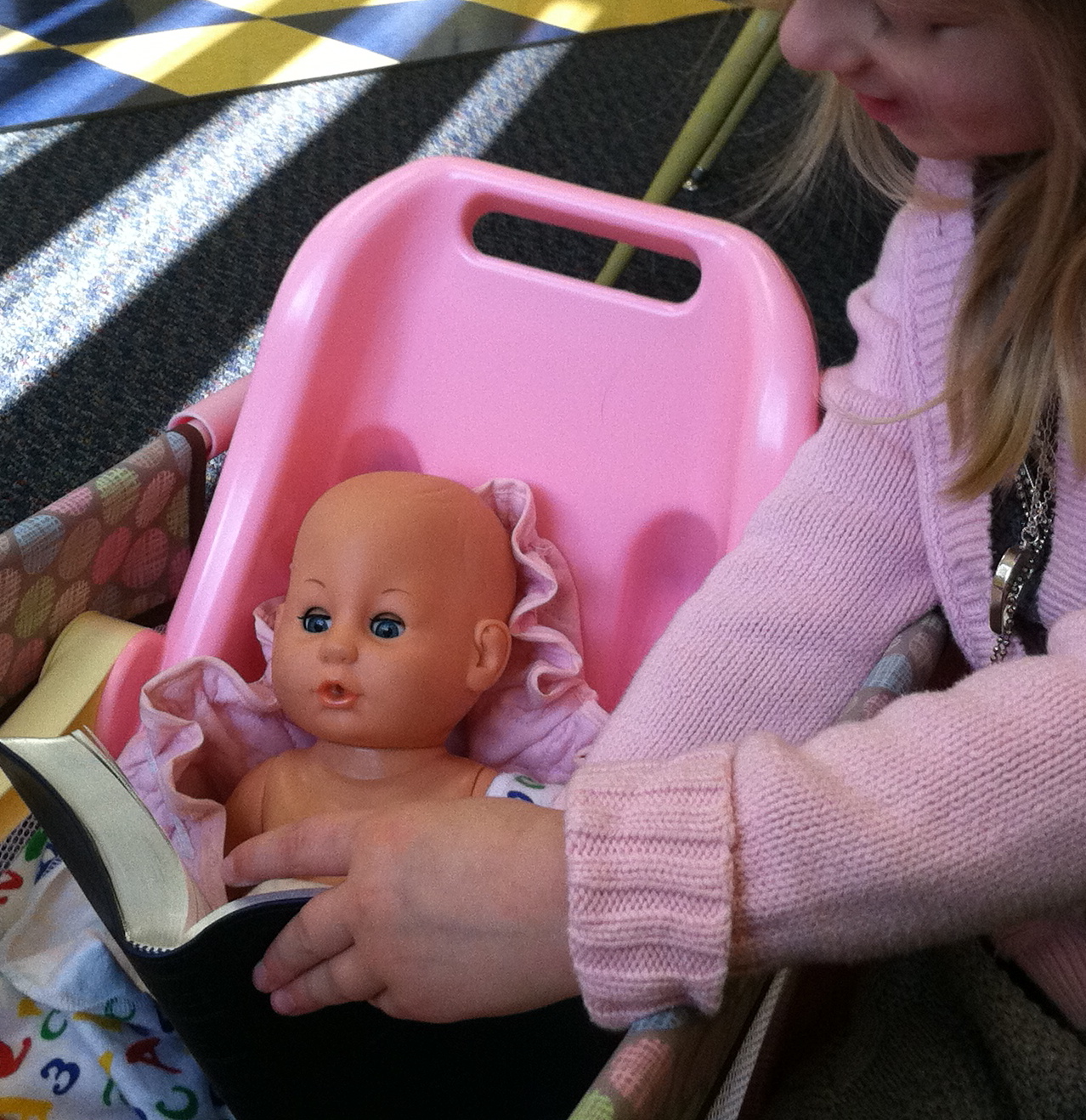
Rocking the doll (Brick by Brick)

This past weekend I met with a church's teachers of younger preschoolers (babies, ones, twos). While we talked about many different things about teaching, one of the most important was building relationships. Relationships are the primary (if not only) way that we teach young children.

As they get older, play and exploration take on importance. But the relationships are still key.

I've been thinking about relationships a lot lately. My "old" kindergartners at church have moved up to first grade class; and now I have some "new" kindergartners. I'm learning about them. They are learning about me. We are just starting to build our relationships.

How am I developing these new relationships?

Names - I am learning their names. Not just what the names are, but how to spell them. Sometimes names are spelled in all kinds of different ways. And, trust me: Haley and Halie are not the same. Our first week together, a girl was painting at the easel. I turned to my wife and began spelling the name (to make sure I was spelling it right). The girl stopped painting and recited the letters of her name. I repeated it and said, "I want to make sure it is right." Names are important. I will use them as I talk with kids.

Talk - I talk to the kids. I ask questions. I make a comment about what I see. I "narrate" what I see the kids doing. "You are rocking the doll. You put the blanket over the doll." (Thanks, Teacher Tom, for always reminding me to interact in this way.) Through conversation, I learn what is important to kids. I know what they are thinking about. I find out new things about my new friends. One girl chose a doll and placed the other two on the floor. "They are dirty," she said. I'm learning more about her.

Listen - Not only do I talk, I also must listen to what the kids say. I should remember what they say. Knowing about pets or siblings or school names is important. Knowing that one child lives with a grandmother or aunt is important. Knowing that a child goes to school at home rather than a school building is important. I should listen and remember to build relationships.

I am also listening to what they are doing. If the kids choose one activity over another, they are telling me something. If they are getting loud or antsy or grumpy, they are telling me something. And I should adjust what I'm doing.

Connect - I saw one of the girls in the hallway on Wednesday night. She was looking toward me and shyly smiling. I waved to her and her grin widened. She waved back. We connected outside of our regular class. Making these types of connections is important to build relationships. This year I will try to send mail, attend outside events, remember birthdays, and connect with my kids in lots of different ways.

How are you relating to your kids? What quick tips do you have to build those relationships?

Friday, June 19, 2015

Two Things that Make Me Cringe

My nemesis
Do you have any particular activities or supplies that you just avoid? Things that other early childhood teachers may embrace or celebrate but that make you cringe when you think of them? I do.

Last week I taught in a four-year-old Vacation Bible School class and was confronted by my old nemesis - glitter. We were making ocean bottles and my lead teacher set out a container of glitter to use (with other materials). I pushed it aside and no one saw it for a while. Then one boy wanted to add some to his bottle - and of course everyone else did, too. I did my best to clean the funnel but I think there's still some clinging to it, sparkling away. I did get it all off my hands. Eventually.

Then, today I was skimming through posts online and I came to this post. I was immediately reminded of the other activity that I continually avoid as much as possible. Spray bottle painting. (I can hardly type the words!) A few years ago, we did this little gem and I vowed then that I wouldn't do it again. And I haven't yet. We put liquid watercolors in small spray bottles. Kids sprayed the paint onto paper at the easel. And created puddles on the floor. And saturated paper so much that I could barely peel the paper from the easel. (I'm sure some of those are still drying somewhere in a teenager's house.) My easel still has flecks of green and blue paint embedded in the sides.

But I'm reminded that not all activities or materials are desirable to all teachers - or all kids. I often do things that other adults have said, "I would never...." I have had kids refuse to do something - for whatever reason. I once had a two-year-old who refused to do anything that would get his hands dirty. He once touched a small pile of shaving cream with his palm and immediately had to wash off the pin-sized spot from his hand.

We must be respectful. If a teacher doesn't feel comfortable with an activity, it's okay. Even if that activity is our favorite one. It's okay. I should not impose my "love" for something on someone who doesn't really care for it. Too many times (especially online) I see judgments or unkind words hurled back and forth over a particular material or activity. I'm glad to help an unsure teacher know the best way to do something. But it's not my place to try to force someone to do something he doesn't want to do.

And that includes kids. I can encourage. I can offer. I can modify. But, ultimately, if I force a child to get his hands dirty when he doesn't want to do so, all I've taught him is that I'm bigger and can "make him" do things. He won't enjoy it or learn from it. I should use all that energy in learning what he enjoys and finding ways to encourage those interests and explorations.

And, yes, I'm Team NoGlitter forever!

Monday, April 28, 2014

No Ordinary Day

I stood in the parking lot of Walgreens and took a deep breath. I looked at the other people walking into and out of the store. I saw the cars driving down the road to somewhere. Everything was normal, ordinary.

"For everyone else," I thought, "this is just an ordinary Thursday." It wasn't an ordinary Thursday for me. My wife had a car accident on Wednesday evening. She is in the hospital. My regular, ordinary days have changed. The people around me were going about their regular routines. Last week I was doing the same. It was a regular Thursday. Now I had a different routine.

Those people went about their business not knowing that I had a new reality. "How are you?" asked the cashier in Walgreens. "Have a great day."

As I drove home on that not-so-ordinary Thursday, I began to think about things. I wondered about my class that day; they had a substitute teacher since I was out. I wondered how things went.

I thought about each of my students. So many of them have challenges in their families or circumstances. I know I only have an inkling of what they face. Yet, often I go through our ordinary school days without thinking about that.

Maybe they are struggling with subtraction or not engaged in our shared reading or having difficulty paying attention because they are distracted by things beyond their control.

Maybe the ordinary day with our learning isn't so ordinary for a student.

I understand. I'm there now myself.

I cannot know everything that is going on with each student. But I can remember that a remark or a reaction or a refusal may have nothing to do with me. In fact, most of what's going on with a student has little to do with me.

So we'll all keep working, step by step. I'll ask questions and listen. About reading. About math. About their lives. We'll keep working through our ordinary days...even when they are not so ordinary.

Friday, March 28, 2014

Missing Something?

Photo © thecrazysquirrel
Creative Commons License
Seventeen years ago I moved from Texas to Tennessee. I love living in Tennessee. One of my favorite things is having four distinct seasons. (I actually get to see trees change colors around October.) I love my Texas roots but I do love my Tennessee home.

However, there's one thing that Tennessee doesn't have that I truly miss. (Well, there are others but we'll go with this one for now.) Bluebonnets.

Each spring, I would see bluebonnets line the highways and country roads in Texas. We don't have those in Tennessee. We do have wildflowers that I enjoy seeing. But no bluebonnets.

I didn't really appreciate those bluebonnets until I didn't see them anymore. When I missed them, I realized how much I liked them.

And that has me thinking right now.

I wonder what I see and experience now that is valuable and I'm missing the value. After all, sometimes you don't realize how valuable something is until it isn't. Just like my bluebonnets.

What's going on in my classroom that I will miss next year?

What valuable things are happening that I don't notice?

What important milestones (students' or mine) are passing right before my eyes?

Will I look back on this year with fondness? regret?

Am I missing opportunities that will never pass again? Opportunities for impacting children's lives? Opportunities to enjoy the little things?

Do I get so caught up in the macro-view that I miss the micro-miracles?

I don't have answers to these questions. In fact, I won't have answers until next year. That's the trick with these "little things." You don't miss them until you miss them. (Profound, huh?)

This week has been Spring Break for me. I have missed seeing those second grade faces each day. I miss having odd things clutter my pockets. I miss hearing the latest WWE updates. I miss hearing them "make numbers." And read to me. And get excited about things that seem small (but aren't).

When I go back next week, I'm going to try to value each experience, large and small. In nine weeks (yikes!) these students will not be my class anymore.

I have a lot of valuing to do then. But now, I'm going to look at bluebonnet pictures on Flickr.

Friday, February 21, 2014

As Long As You Have a Teacher Who Cares


My professor in one of my classes was musing about challenges in the classroom these days. After we had discussed a few things, he acknowledged that things can be difficult.

Then he said these words: "But there's always hope as long as you have a teacher who cares and who is willing to try new things."

I quickly began typing those words, so I could remember them. But he continued. He said my name: "As long as Scott cares for his students, there will be at least one good thing each day. It's when he gives up, when he thinks that the students are no longer worth it...that's when we have a problem."

I sat there almost stunned.

I know why he used me as an example. I'm the only one in the class that is currently in a classroom.

And I know why those words came out of his mouth. I needed to hear them.

I needed to hear them that day. I needed to hear them for the rest of the week I would have.

As I type this, I am on a personal day from school, trying to think through some things and adjust for next week.

On some days, I'm completely opposite from the teacher I want to be. I feel like I have a couple of kids that hijack the learning from others. I've felt at the point of just giving up.

But those words - As long as Scott cares for his students - pop back in my head. I do care. The ones that need my care the most, the ones that I want to reach the most, are the same ones that cause the most disruption.

Then I read this post about what students remember. I worry about what they will remember - the caring me or the frustrated me.

Yesterday, as I cleaned up spilled water, one boy said to me: "Mr. Wiley, you know things. When something happens, you find a way. You figure things out."

I'm trying, buddy. I'm trying to find a way.

And I'm looking for that one good thing each day.

Saturday, January 11, 2014

This Is For You

School started back this week. After extreme cold and maintenance issues, we finally went back two days late - on Thursday.

Kids were coming in and I was working to get them to remember and follow our morning routines. One boy said, "I have something for you, Mr. Wiley." He reached into his backpack and pulled out a teddy bear. "Here, this is for you," he said.

The bear looked like one that had been around for a little while, loved and used.

"Thank you," I said. "Is this for me to look at or to keep?"

"To keep," he said. I wasn't sure what to do - but my heart filled with gratitude and warmth.

"I'll put it here for now," I said and laid the bear on the side of my desk.

The day went on...as days do. At one point, I asked again if the bear was for me to keep. The boy said it was. I told him I would keep it at school, near my desk. But, for the present, I left the bear lying where I had place it originally.

Later in the day, the boy and I were standing near my desk. He touched the bear and said something about it. I asked again if I was to keep it and he said that I was. Then he said, "Sometimes I sleep with this bear." Just stated that fact plainly, no particular emotion in his voice.

I took a couple of deep breaths to think. "You tell me what I should do," I said to him. "I can keep the bear here at school. Or I could take a picture of the bear to look at and you could take him back home. Which would you like for me to do?"

He pondered for a minute and said, "Take a picture."

I dug my phone out of my pocket to snap a photo. I started to tell him where to lay the bear when he hugged it to himself in pose. "Hmm," I said. "Do you want me to take a picture of the bear by itself or with you."

He didn't even ponder. "With me."

I snapped the photo and told him to put the bear in his backpack. He smiled and did just that.


At another point in the day, I don't remember if it was before or after the bear photo, this same boy said, "Mr. Wiley, I missed you. The only reason I came back to school is to see you."

This boy is not one of my best students...in fact he struggles a lot. He's not one of my attention-seekers or non-stop talkers. He's not one of the ones that wants hugs or to tell me his latest adventure. I am surprised by his statement and his amazing gift to me.

So many times since I started this adventure...in fact even this two-day week...I sometimes wonder if much worthwhile is happening in my classroom. I seem to fight every day to get something into their heads (and maybe hearts). I see so many times when I could do better. I hear my tone or my words and know that I have areas that need growth or mastery.

But this evening, going through my photo roll, I see this photo. And I remember that, sometimes, this flawed mid-life new teacher can make an impact.

I guess I'll get back at it for another week.

Wednesday, January 1, 2014

A Photo to Represent 2013

I read about Kinderchat's Post-a-Day Challenge. While I will not be able to participate in the month-long challenge, I was intrigued by today's prompt: Post a photo to represent 2013.


Wristbands (Brick by Brick)

BFF Wristbands made and applied by kids in my class

(This post is to be Wordless, so I'll forgo my reflections on the photo. But it's hard....)

Saturday, September 21, 2013

You Said Maybe!

One of my personal favorite posts on Brick by Brick is the Power of Yes. Recently I was reminded of that power.

A boy in my class loves wrestling. He came back from a trip to the library with a book about wrestlers (the WWE ones not the Olympic ones). We looked at it together.

At the end of the book was a Web site. "Look," I said. "Here is a place you can go on the computer and find out more information."

His friend said to him, "You can't do that at school."

"Maybe we can go sometime," I said.

The boys looked at each other and repeated, "He said maybe. He said maybe. He said maybe."

Later, the boy said to me, "You are an awesome teacher. You said maybe."

Just saying maybe makes me awesome? Well, I'm sure that's not true. But it is interesting that he thinks so.

Before he took the book back, we wrote down the Web address. And we did go and visit for a few minutes. He got to go there one day when in the computer center (and he had completed his work there).

I keep that Web address under my keyboard. He asked to see it the other day, just to make sure we still had it. "Don't lose it," he said.

I think I will always keep it. Just to remind me that saying yes can be so powerful.

(By the way, did I mention that this boy is one of my most challenging ones in class? We struggle sometimes but I think that even on difficult days the relationship is growing. The power of yes can impact all kinds of things in the classroom.)

Saturday, March 2, 2013

Are They Doing What I'm Doing?

I've always believed that what I do in the classroom is so important. The students "listen" more to what I do than what I say. But this week, I've been reminded again of the importance of my example.

At one point this week, they were working on addition and subtraction. (We're working to be fluent and fast in our addition and subtraction, especially within 10.) I told one boy to check what he had written. He looked at it and hit his forehead. "Oh, man," he said as he began to erase.

"You just made a mistake when you were adding, didn't you?" I said. He nodded. He looked so dejected. 

"You made a mistake. That's okay," I said. "Just take care when you are working. Don't rush. But it's okay. You just made a mistake. Everyone makes mistakes. You make mistakes. Mr. Wiley makes mistakes. All of us make mistakes."

Another boy looked up. "You make mistakes?" he said. 

I was surprised at his comment. I make mistakes all the time. I try to admit them when I make them in class. "Of course I make mistakes," I said. "I make lots of mistakes. But I want to learn when I make mistakes and be more careful next time." A reminder that I need to be transparent as a example to my students.

As I've written before, my class is talkative and loud. I'm working to keep the classroom at an acceptable level for everyone to learn and work (including me). I was talking to the class and I noticed that my voice was really loud. And that's not at a time I was trying to talk over the other voices. I don't do that now. I stop and wait for the room to quiet down before I continue talking. But I was talking at a loud volume...and it even hurt. I dropped my voice to a lower level. I would catch myself talking loud at various times. I must consciously focus on keeping my voice at a good volume. This is a good example for the kids...and helps me keep from straining my voice. My actions set the standard for their actions. 

Example and relationships are some of the most important things I bring to the classroom. Sometimes I use them well. Sometimes I fall short. But I always want to strive to be a teacher that children can follow and emulate.

Sunday, February 24, 2013

Sometimes It's the Little Things

In my university class, the professor has said more than once, "95% of the problems you have were created by you." And I know that's true.

I've been struggling with classroom management. In fact, I've been struggling with just keeping the noise level at decent decibels. (Less than the sound of an industrial manufacturing plant would be nice.) My principal tells me that classroom management and pacing of teaching are the two things that most new teachers struggle with. And I have been. I know that the things I did at the beginning of the year (and since then) have contributed to the issue. I've "taught" them to do this and I'm working on adjusting it.

In the past couple of weeks, I attended training related to classroom management and made some adjustments. Because my class is full of talkers (and the things I've been doing have apparently been contributing to that), I'm working on them to raise their hands before speaking. That way we can have a reasonable discussion without 17 voices speaking at once. Calling out, repeatedly saying my name, talking over each other, walking up behind me to ask a question - all things we're working on to make our classroom work a little better, to get things in better shape.

This past week was rough. Probably the roughest I've had since August. I felt my patience worn completely through. I did use a loud voice a few times. I was exhausted and felt a little defeated by Friday. 

And then...Friday afternoon as we were having a discussion, a tiny glimmer. One of my very social and vocal girls started to speak, stopped herself, and raised her hand. I called her name and she made a comment. Then she said, "Mr. Wiley, I started to call out. But then I stopped and raised my hand."

I smiled. "I saw that," I told her. "Thank you."

Sometimes it's the little things that give you hope. Maybe things can be different.